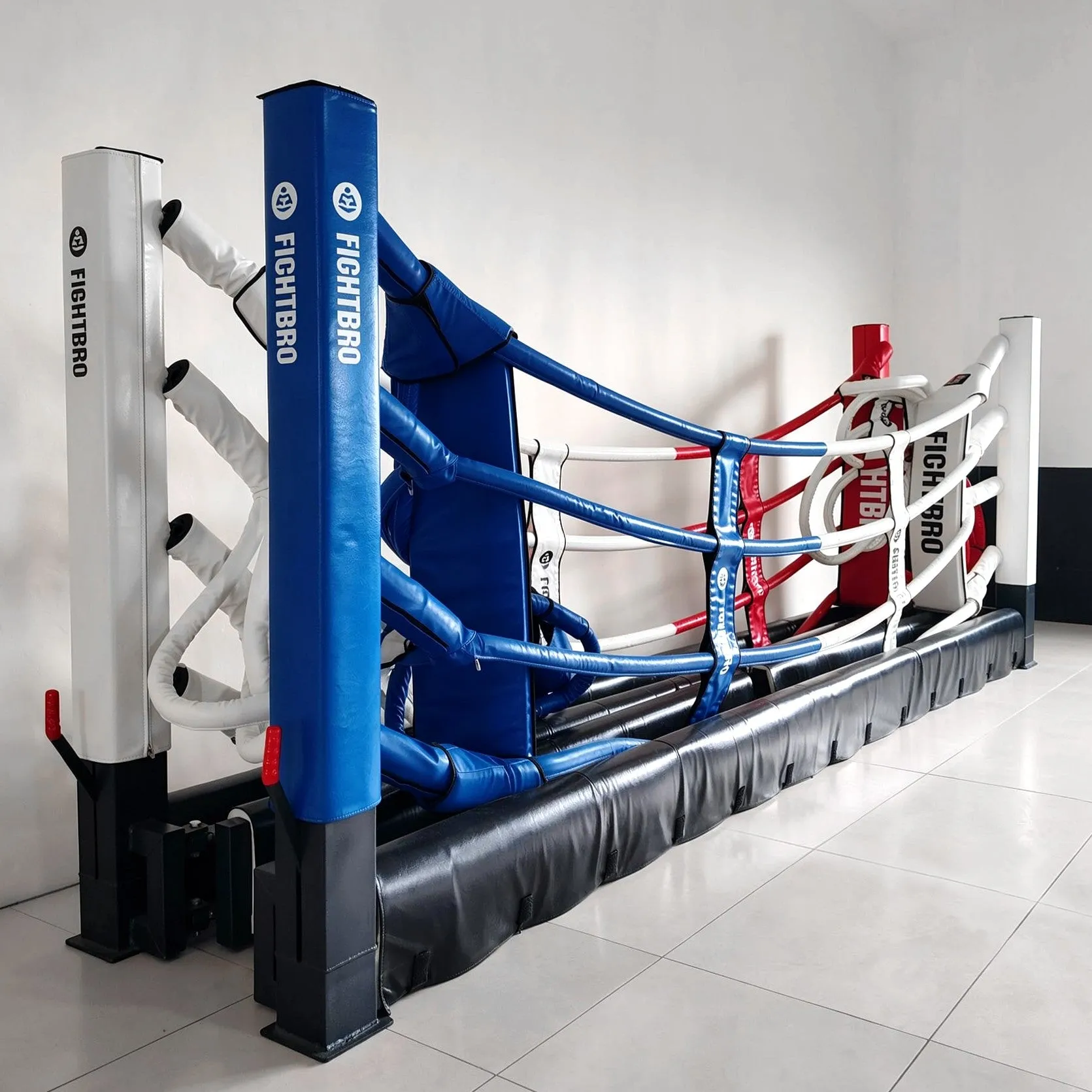
Running a fight gym in a smaller commercial space often means making every square foot work harder. Owners may need room for heavy bags, pad work, warm-ups, strength equipment, group classes, and sparring, all within the same training floor.
A traditional ring can take up a large amount of permanent space, which may not be practical for compact boxing or mixed-use facilities. For gyms that need more flexibility, a ring that can be adjusted or folded away can make it easier to use the same area for different activities throughout the day.
Start With How the Space Is Used
Before choosing any ring, owners should look at how the gym operates from morning to evening. A space used for private boxing lessons in the morning may need to accommodate group conditioning, bag work, or youth classes later.
In smaller gyms, permanent equipment can limit how quickly the room can adapt. A ring may be essential for sparring, but it may not need to occupy the same footprint during every class.
Understanding which activities require open floor space can help owners decide whether a flexible ring setup makes more sense than a fixed installation.
Why a Foldable Ring Can Help
A foldable boxing ring can be useful for facilities where the training area needs to serve more than one purpose. Instead of dedicating the same section permanently to sparring, the layout can be adapted when the ring is not required.
This can be especially practical for smaller boxing studios, personal-training spaces, martial arts academies, and facilities that offer a mix of striking and conditioning classes.
The main advantage is not simply saving space. It is creating more control over how that space is used during different parts of the schedule.
Think About Class Scheduling
Space planning becomes easier when equipment choices match the timetable. For example, a gym may schedule technical boxing and sparring during specific evening sessions while keeping daytime classes focused on fitness or bag work.
If the ring can be folded or repositioned when appropriate, coaches may gain additional room for circuits, partner drills, mobility work, or larger group sessions.
This type of flexibility can also help when class sizes vary. A training floor that works for six athletes may feel crowded when fifteen members arrive at once.
Compare It With a Permanent Ring
A fixed Boxing Ring can be an excellent choice for larger facilities where sparring and competition preparation are central to the daily schedule. It provides a dedicated training area that remains ready for use throughout the day.
However, smaller gyms may not always have enough room to leave a full ring permanently installed without affecting other activities. Heavy bags, benches, storage, mats, and strength equipment also need space.
The decision should therefore depend on training priorities rather than appearance. A permanent ring may suit one facility, while a foldable setup may provide more practical value in another.
Measure the Full Footprint
One common mistake is measuring only the internal area of the ring. Owners should also account for posts, ropes, access points, surrounding walkways, and space needed for coaches to move around the perimeter.
In a compact facility, even a small difference in overall dimensions can affect the rest of the floor plan. Marking the proposed footprint with tape before installation can provide a clearer idea of how the ring will affect movement.
It is also worth testing whether members can still access bags, storage areas, exits, and changing spaces comfortably.
Keep Storage in Mind
A flexible training floor still needs organized storage. Pads, gloves, skipping ropes, resistance equipment, and cleaning supplies should not be left in the area where the ring needs to open or close.
Wall-mounted shelving, vertical racks, and clearly defined equipment zones can help preserve usable floor space.
Owners should also think about where movable components will go when the ring is not fully in use. Good storage planning helps keep the facility looking organized while reducing unnecessary clutter.
Plan Around Other Training Zones
A compact fight gym often combines several activities in one room. Bag work may happen along one wall, while strength equipment occupies another section and open floor space is used for warm-ups or partner drills.
The ring should fit into this flow rather than interrupt it. Athletes should be able to move between zones without crossing directly through active sparring or coaching areas.
Flexible equipment can be especially useful when the same room supports boxing, kickboxing, conditioning, and small-group training on different days.
Do Not Ignore Maintenance
Any commercial ring requires regular inspection. Ropes, padding, canvas, joints, and moving components should be checked for wear, especially when the structure is adjusted frequently.
Staff should understand how the ring is opened, secured, and stored so that the setup remains consistent.
Regular cleaning is also important because areas underneath or around movable equipment can easily be missed during normal floor maintenance.
Conclusion
Limited space does not necessarily prevent a gym from offering proper ring training. The key is choosing equipment that fits the way the facility actually operates.
For smaller fight gyms, a flexible ring setup can make it easier to balance sparring with group classes, conditioning, and open-floor training. By measuring carefully, planning storage, and matching the ring to the schedule, owners can make better use of their training area without giving up an important part of boxing practice.
